The MAONO PD100 XLR Podcast Microphone review is for creators building an XLR-based desktop setup who want a dynamic mic, basic stand hardware, and a cable in one package.
Its focused cardioid design and included desk base make it a straightforward starting point for podcasting, streaming, and voice recording.
MAONO PD100 Review Summary
The quick verdict
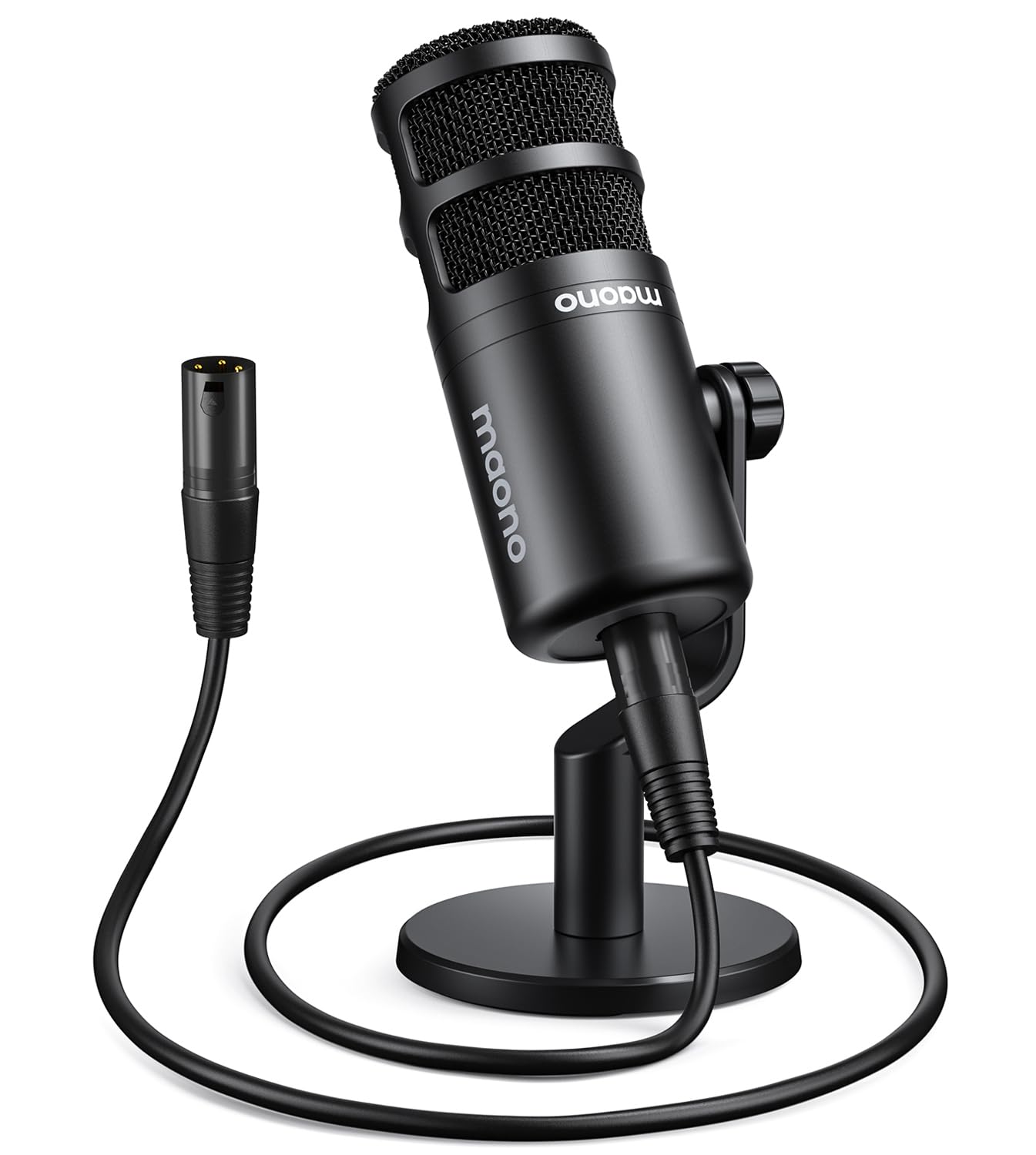
800+ ratings
Read Amazon ReviewsMAONO PD100
A practical starter option for podcasters and streamers who already use an audio interface or mixer and want a desktop stand included.
- Dynamic XLR microphone with a cardioid pickup pattern and top-address speaking orientation.
- Specified frequency response of 60 Hz–14 kHz for vocal recording and spoken-word work.
- Built-in dynamic core and inner double-layer pop filter intended to reduce plosive impact.
- Metal microphone body with a compact design.

Pros
- Includes the core desk mounting pieces and an XLR cable, simplifying a first setup.
- Cardioid pickup and a dynamic capsule are aimed at voice-centered recording.
Consider before buying
- XLR operation requires a compatible audio interface, mixer, or other suitable XLR input.
- The included desk base uses surface area; buyers preferring an arm-mounted setup should check stand placement and mounting needs.
Read the full review summary
The PD100 pairs a dynamic capsule with a cardioid pickup pattern, an inner double-layer pop filter, and a compact metal body.
Its 60 Hz–14 kHz frequency response is specified for voice-oriented recording, while the included rod extender, weighted circular base, and XLR cable reduce the number of separate pieces needed for a basic desk setup.
This model suits someone who already has an XLR audio interface, mixer, or compatible audio device and wants a simple microphone position near the speaker.
The desktop stand may be convenient for a fixed workstation, though buyers should consider desk space and preferred mic placement before choosing a base-mounted design.
The buying factors
MAONO PD100 Scorecard
Editorial scores reflect listed features and buyer fit; they are not laboratory measurements or customer ratings.
Voice-focused design
A dynamic capsule, cardioid pattern, and stated 60 Hz–14 kHz response are a sensible feature mix for spoken-word use.
Plosive management
The inner double-layer pop filter is designed to attenuate plosive sounds, though careful speaking position remains useful.
Included setup hardware
The package includes a desktop stand, extender, metal base, and 6.56-foot XLR cable.
Connection flexibility
The XLR connection works with an interface or mixer, so the setup depends on having compatible gear.
Desk footprint and portability
The compact microphone and portable form are convenient, while a round base still occupies desktop space.
Stand compatibility
Built-in 5/8-inch and 3/8-inch threads are specified for installation with many microphone stands.
Key Features and Specifications of MAONO PD100
- Dynamic XLR microphone with a cardioid pickup pattern and top-address speaking orientation.
- Specified frequency response of 60 Hz–14 kHz for vocal recording and spoken-word work.
- Built-in dynamic core and inner double-layer pop filter intended to reduce plosive impact.
- Metal microphone body with a compact design.
- Desktop bracket includes a 2.36-inch rod extender and a heavy circular metal base.
- Built-in 5/8-inch and 3/8-inch threads for compatibility with many microphone stands.
- Package includes a 6.56-foot XLR cable, desktop stand, rod extender, base, and user manual.
Pros and Cons of MAONO PD100
Pros
- Includes the core desk mounting pieces and an XLR cable, simplifying a first setup.
- Cardioid pickup and a dynamic capsule are aimed at voice-centered recording.
- Inner double-layer pop filter offers an additional design measure for plosive attenuation.
- Extender can bring the microphone closer to the speaker when using the included desktop bracket.
Consider before buying
- XLR operation requires a compatible audio interface, mixer, or other suitable XLR input.
- The included desk base uses surface area; buyers preferring an arm-mounted setup should check stand placement and mounting needs.
- The specified frequency response is voice-oriented, so buyers seeking a broader stated range for varied sources may prefer to compare options.
Who Should Buy MAONO PD100?
Good fit
Consider the PD100 if your recording chain already includes an audio interface or mixer and you want a dedicated XLR microphone for a desk-based podcast or streaming setup.
The capsule, cardioid pattern, pop filter, and top-address orientation give you a clear starting point for positioning the mic toward your voice.
The included base and extender are useful if you want a self-contained desktop mount rather than sourcing the basic support hardware separately.
Before buying, check that your desk has room for the circular base and that its height and placement can bring the mic close enough for your preferred speaking posture.
It can also suit a creator moving from a built-in computer microphone to a more configurable recording chain.
The XLR cable is included, but the interface or mixer remains part of the setup, so account for that equipment and its controls.
Who should skip it
Skip this model if you need a microphone that connects directly to a computer over USB; the PD100 uses an XLR connection and is designed to work with an interface or mixer.
Look for a different mounting arrangement if your workspace cannot spare room for a desktop base or you need the mic positioned from a floor stand or boom arm.
Check the mounting hardware and reach of any alternative against your actual setup.
How the MAONO PD100 Fits a Desktop Recording Setup
A conventional XLR path
The PD100 is built around an XLR connection, which places it in a recording chain with an interface, mixer, or compatible input.
This can work well for creators who already adjust input levels and routing through that equipment, but it adds a setup dependency for a first-time buyer.
Confirm that your device accepts the included XLR cable and that you have a way to manage the microphone input.
Cardioid pickup and speaking position
A cardioid pattern is intended to favor sound arriving from the front of the microphone. With the specified top-address orientation, speak toward the mic’s top and position it close enough for the intended voice-centered use.
The pattern may help focus the setup around one speaker, but room acoustics and mic placement still shape the result.
Pop filtering for close speech
The inner double-layer pop filter is designed to attenuate plosive sounds, which can be useful when recording close speech.
It is one part of the setup: angle and distance can also affect how strongly breath and consonant bursts reach the capsule. A buyer can adjust position during a short recording check to find a comfortable arrangement.
Desk mounting and adjustment
The included bracket, extender, and heavy circular base provide a desktop mounting route, with the extender adding 2.36 inches of height. That offers a simple way to bring the mic nearer without selecting a separate stand immediately.
If you use a different stand, the 5/8-inch and 3/8-inch threads are intended to accommodate many common mounts; check your existing hardware before relying on a particular fit.
Alternatives to MAONO PD100
Multipurpose Dynamic Microphones alternative
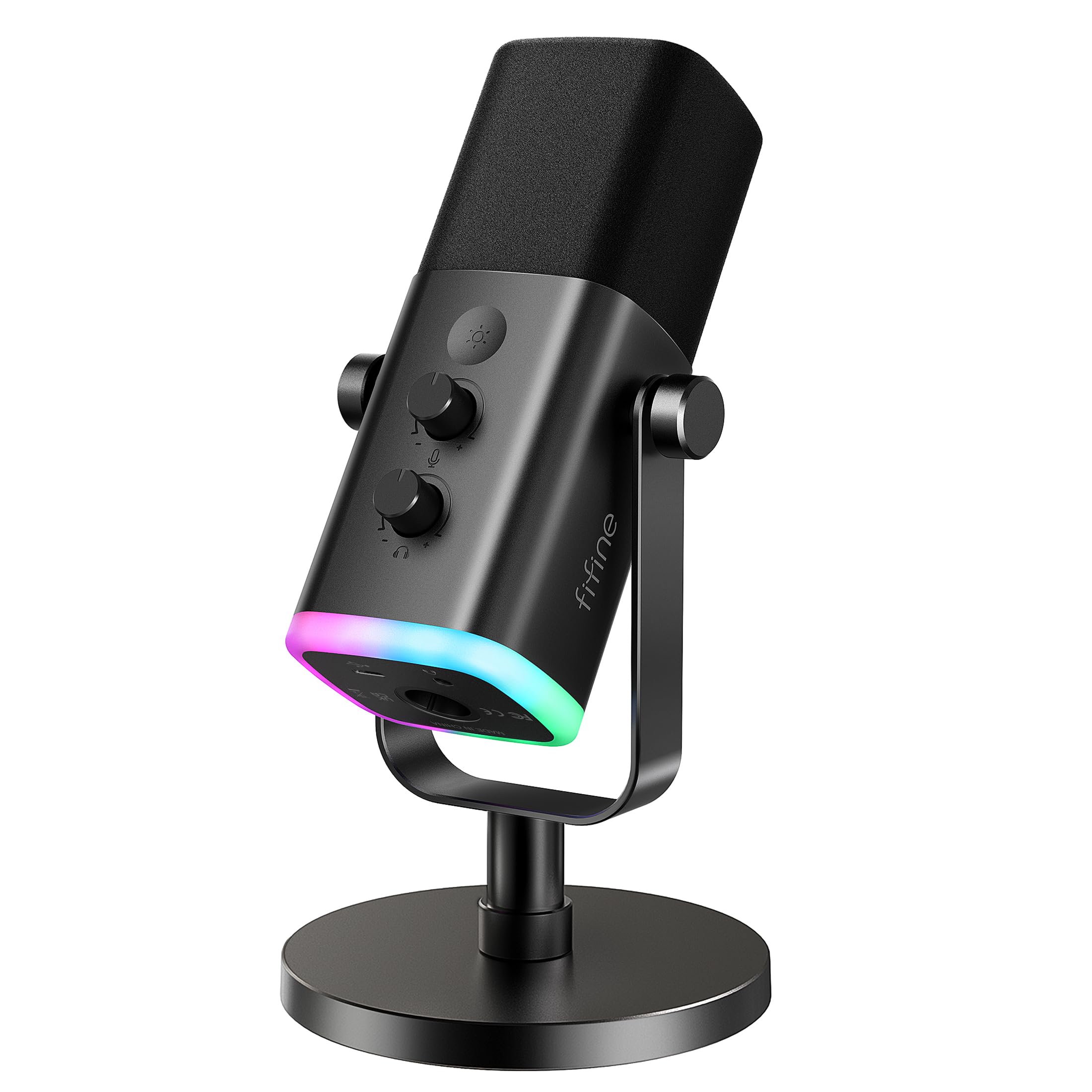
12,000+ ratings
Read Amazon ReviewsFIFINE AmpliGame AM8
Choose the MAONO if you want an XLR-focused kit with its cable and desktop support included.
Consider the FIFINE if direct USB connection and USB-mode controls matter, or if you want the option to use XLR later and are prepared to supply the separate cable.
- The FIFINE AM8 supports both USB and XLR connections.
- Its USB mode includes a mute control, RGB lighting, headphone monitoring, and gain control; the XLR cable is separate, and its USB functions are inactive over XLR.
- The MAONO PD100 is an XLR-only dynamic microphone with an included desktop stand, base, extender, and XLR cable.
Multipurpose Dynamic Microphones alternative
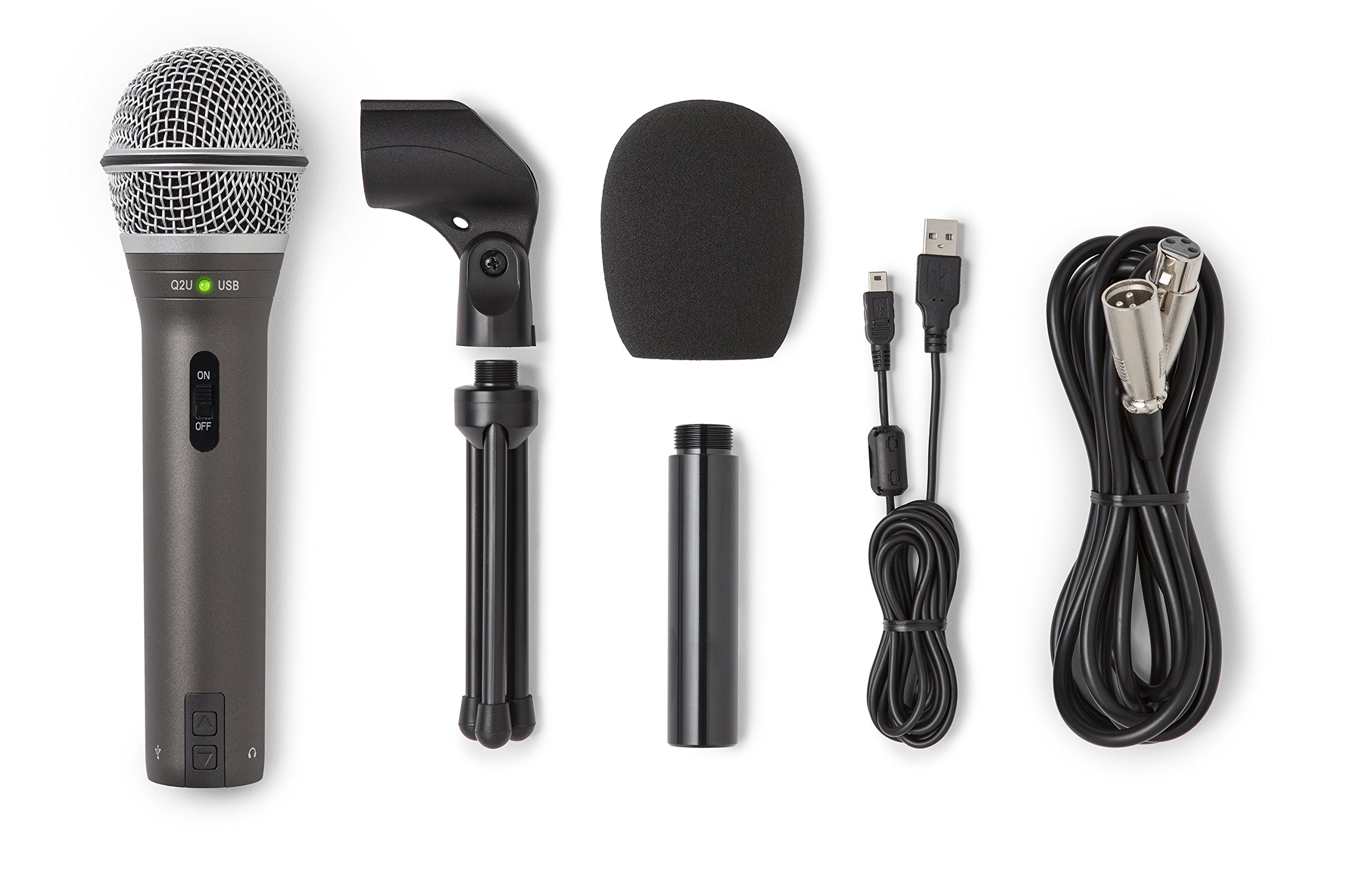
5,000+ ratings
Read Amazon ReviewsSamson Q2U
The PD100 fits a buyer who already has an XLR recording chain and prefers its included circular desktop base.
The Q2U is a useful alternative for someone who wants USB-C as well as XLR, plus a handheld form and a tripod-style stand.
- The Samson Q2U offers both XLR and USB-C connections. Its package includes a tripod desktop stand, extension, mic clip, windscreen, USB-C cable, and XLR cable.
- The MAONO PD100 is a compact XLR desktop microphone with a circular base and extender supplied in the package.
Is MAONO PD100 Worth It?
The MAONO PD100 is worth considering for a home podcaster or streamer who already has an XLR interface or mixer and wants a compact dynamic microphone with basic desk mounting hardware included.
Its cardioid pattern, built-in pop filter, extender, and supplied cable make the package practical for a straightforward voice setup.
Buy it if the XLR workflow and desktop base suit your space. If direct computer connection or more flexible mounting is central to your setup, compare those requirements carefully before choosing this model.
Your review at a glance
800+ ratings
Read Amazon ReviewsMAONO PD100
A practical starter option for podcasters and streamers who already use an audio interface or mixer and want a desktop stand included.
- Dynamic XLR microphone with a cardioid pickup pattern and top-address speaking orientation.
- Specified frequency response of 60 Hz–14 kHz for vocal recording and spoken-word work.
- Built-in dynamic core and inner double-layer pop filter intended to reduce plosive impact.
- Metal microphone body with a compact design.