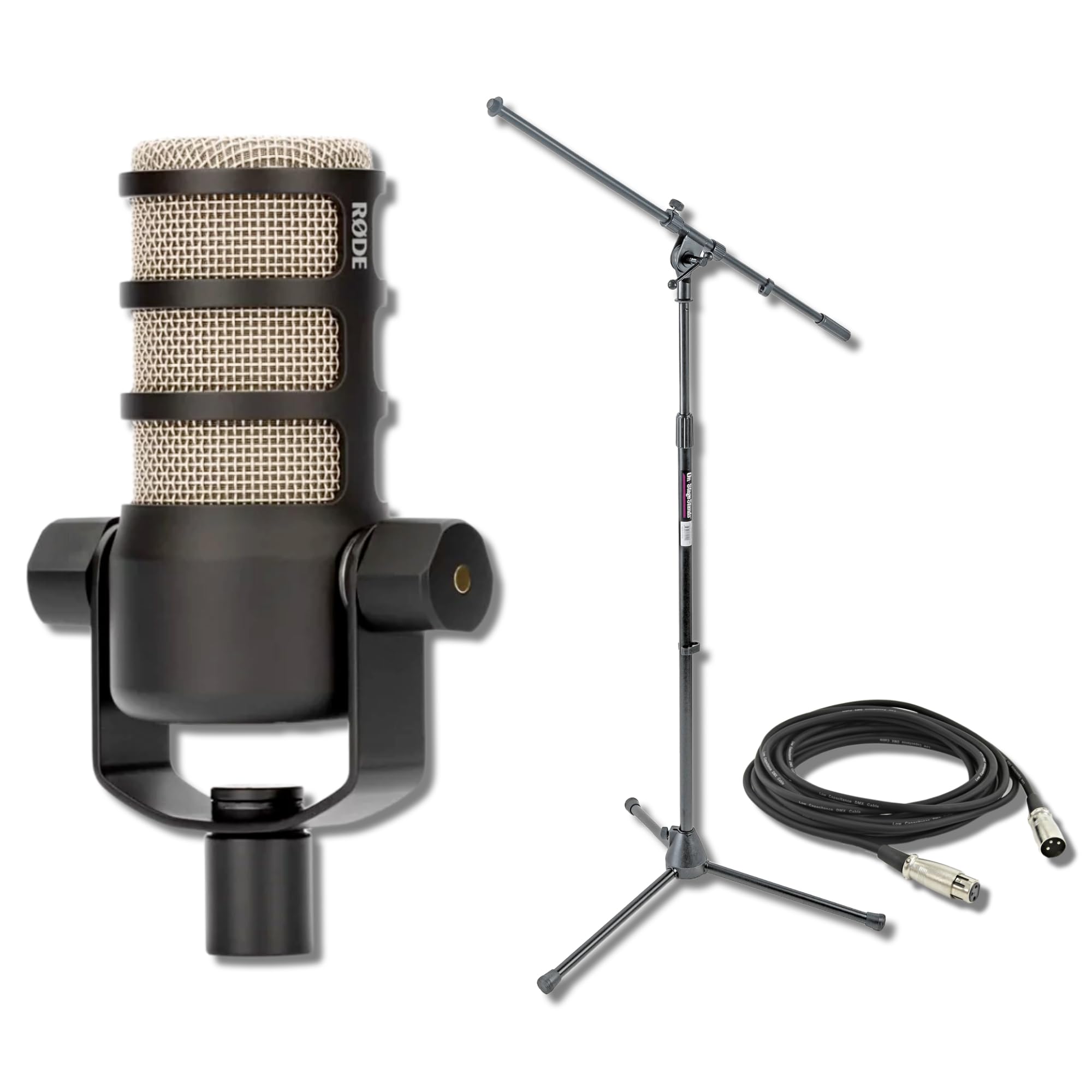
This review rode podmic buyers should read focuses on a bundle built for a ready-to-place broadcast setup: the Rode PodMic, a tripod floor stand with boom arm, and a 20-foot balanced XLR cable.
It suits creators with an audio interface or mixer who want to position a microphone without using a desk clamp.
Rode PodMic Review Summary
The quick verdict
3+ ratings
Read Amazon ReviewsRode PodMic Bundle
A practical fit for podcasters and voice-over creators who want an XLR microphone, floor stand, and long cable in one setup.
- Rode PodMic dynamic microphone with cardioid pickup and end-address capsule.
- Internal dual-mesh pop filter and internal shockmount.
- Balanced three-pin XLR output; the dynamic capsule does not require 48V phantom power.
- 20 Hz–20 kHz frequency response.

Pros
- Bundles the microphone with a floor stand and long XLR cable, reducing the number of separate setup pieces to source.
- The cardioid dynamic design, internal shockmount, and pop filter are suited to close spoken-word recording.
Consider before buying
- XLR-only operation means you need an audio interface, mixer, or another compatible XLR input device.
- A floor tripod takes up room around the recording position, so measure the space needed for the base and extended boom.
Read the full review summary
The PodMic is a cardioid dynamic microphone with an end-address capsule, internal pop filter, and internal shockmount.
Its all-metal body and integrated swing mount make it a substantial studio-style choice, while the included stand and cable address two practical setup needs at once.
This bundle is most compelling for solo podcasters, broadcasters, livestreamers, or voice-over artists who already have an XLR interface or mixer.
The floor stand offers an alternative to a desk-mounted arm, and the 20-foot cable gives more room to place the mic relative to the recording gear.
The package still depends on external audio equipment; it is not a USB microphone.
The buying factors
Rode PodMic Scorecard
Editorial scores reflect listed features and buyer fit; they are not laboratory measurements or customer ratings.
Broadcast voice focus
The cardioid dynamic design and end-address pickup suit close spoken-word use, with the description emphasizing a broadcast-style midrange.
Plosive management
An internal dual-mesh pop filter is included in the mic design, reducing the need to add an external screen to the setup.
Connection flexibility
Balanced XLR output works with an interface or mixer, but the microphone has no USB connection.
Included setup gear
The bundle includes a boom tripod floor stand and a 20-foot XLR cable alongside the microphone.
Positioning range
The stand's 36–64-inch height range and 30-inch removable boom provide useful placement options.
Room-noise suitability
The cardioid dynamic design is intended to focus on the speaker, though placement and room conditions still matter.
Key Features and Specifications of Rode PodMic
- Rode PodMic dynamic microphone with cardioid pickup and end-address capsule.
- Internal dual-mesh pop filter and internal shockmount.
- Balanced three-pin XLR output; the dynamic capsule does not require 48V phantom power.
- 20 Hz–20 kHz frequency response.
- On-Stage MS7701B tripod floor stand with 36–64-inch height adjustment and a removable 30-inch boom arm.
- Stand has a 23-inch base spread, folds flat for transport, and uses a 5/8-inch-27 top thread.
- Includes a 20-foot balanced XLR cable.
Pros and Cons of Rode PodMic
Pros
- Bundles the microphone with a floor stand and long XLR cable, reducing the number of separate setup pieces to source.
- The cardioid dynamic design, internal shockmount, and pop filter are suited to close spoken-word recording.
- The boom stand can position the microphone without occupying desk space with a clamp.
- The XLR connection integrates with common interfaces and mixers, and the mic does not need phantom power.
Consider before buying
- XLR-only operation means you need an audio interface, mixer, or another compatible XLR input device.
- A floor tripod takes up room around the recording position, so measure the space needed for the base and extended boom.
- The included 20-foot cable may be more length than a compact desk setup needs.
Who Should Buy Rode PodMic?
Good fit
Consider this bundle if you record speech through an interface or mixer and want a floor-standing boom rather than a desk clamp.
The stand's height range and removable boom can help place the mic near a seated or standing speaker, while the cable gives flexibility in locating recording equipment.
It is also a sensible fit if you want the microphone's pop filter and shockmount built into the mic body.
Before buying, check that your interface or mixer has a suitable XLR input and that the stand's footprint fits your space.
Who should skip it
Skip this setup if you need a microphone that connects directly to a computer by USB, or if you do not have an XLR interface or mixer.
The bundle centers on an XLR recording chain, so confirm your existing gear can accept it.
A desk-only workspace may be better served by another mounting arrangement. This package's floor tripod is useful when desk clamps are impractical, but it requires open floor area around the speaker.
Rode PodMic Bundle Review: How the Setup Fits a Broadcast Workflow
A spoken-word focused microphone
The PodMic's cardioid pattern is designed to pick up sound from the speaker's direction, while the end-address form means you speak toward the end of the mic.
That layout can help keep a close, deliberate voice position in a podcast or voice-over booth. It does not remove the need to manage mic distance, speaking angle, or room noise.
Built-in pop and vibration control
The internal dual-mesh pop filter addresses plosive bursts within the microphone, so an external screen may not be necessary for every setup. The internal shockmount is intended to isolate the capsule from mechanical vibration.
A boom stand still benefits from careful handling, especially when repositioning during a take.
Plan around the XLR signal chain
This is an analog XLR microphone, not a direct-to-computer USB device. Connect it to an audio interface, mixer, or compatible broadcast console, then use that equipment to route and manage the signal.
Since the dynamic capsule does not require 48V phantom power, the mic itself does not need that setting; follow your interface's normal connection guidance.
A floor stand changes the room layout
The included stand can adjust from 36 to 64 inches and has a 30-inch removable boom, making it adaptable to different speaker positions. Its 23-inch base spread provides a defined footprint, and the stand folds flat for transport.
Measure the available floor area and think through where the boom will extend before settling on a recording position.
Alternatives to Rode PodMic
Multipurpose Dynamic Microphones alternative
600+ ratings
Read Amazon ReviewsSamson Q9U
Choose the Rode bundle if the included floor stand and cable fit your setup and you already use XLR.
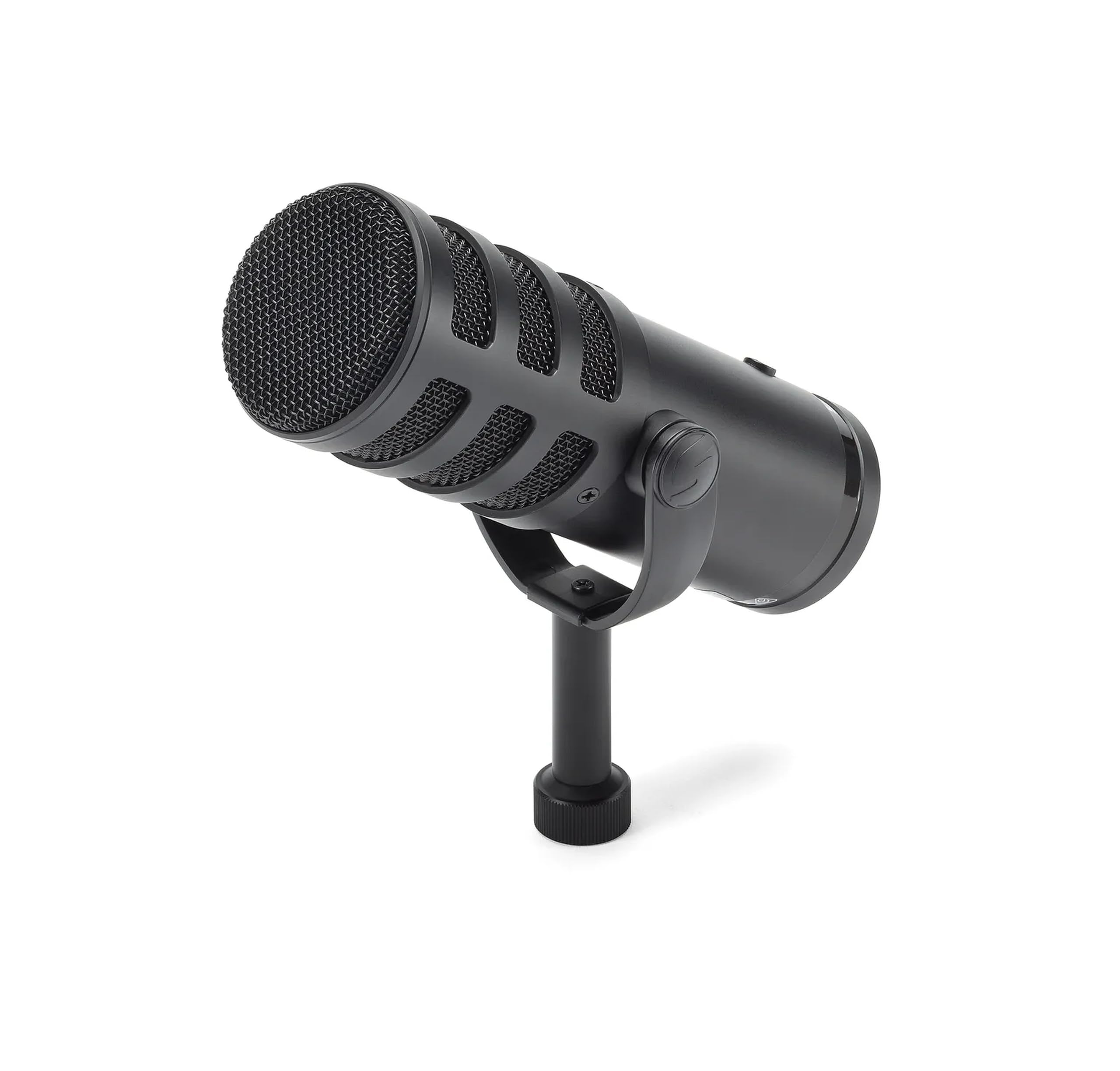
Consider the Q9U if having both USB-C and XLR connections, plus direct headphone monitoring and a mute switch, better matches how you record.
- The Q9U offers both XLR and USB-C outputs, onboard mute, zero-latency headphone monitoring, and an internal shockmount.
- The Rode bundle is an XLR-only PodMic package with a floor stand and 20-foot cable.
Multipurpose Dynamic Microphones alternative
5,000+ ratings
Read Amazon ReviewsSamson Q2U
The Rode is a stronger fit if you want a floor boom and a longer cable for an XLR-centered room setup.
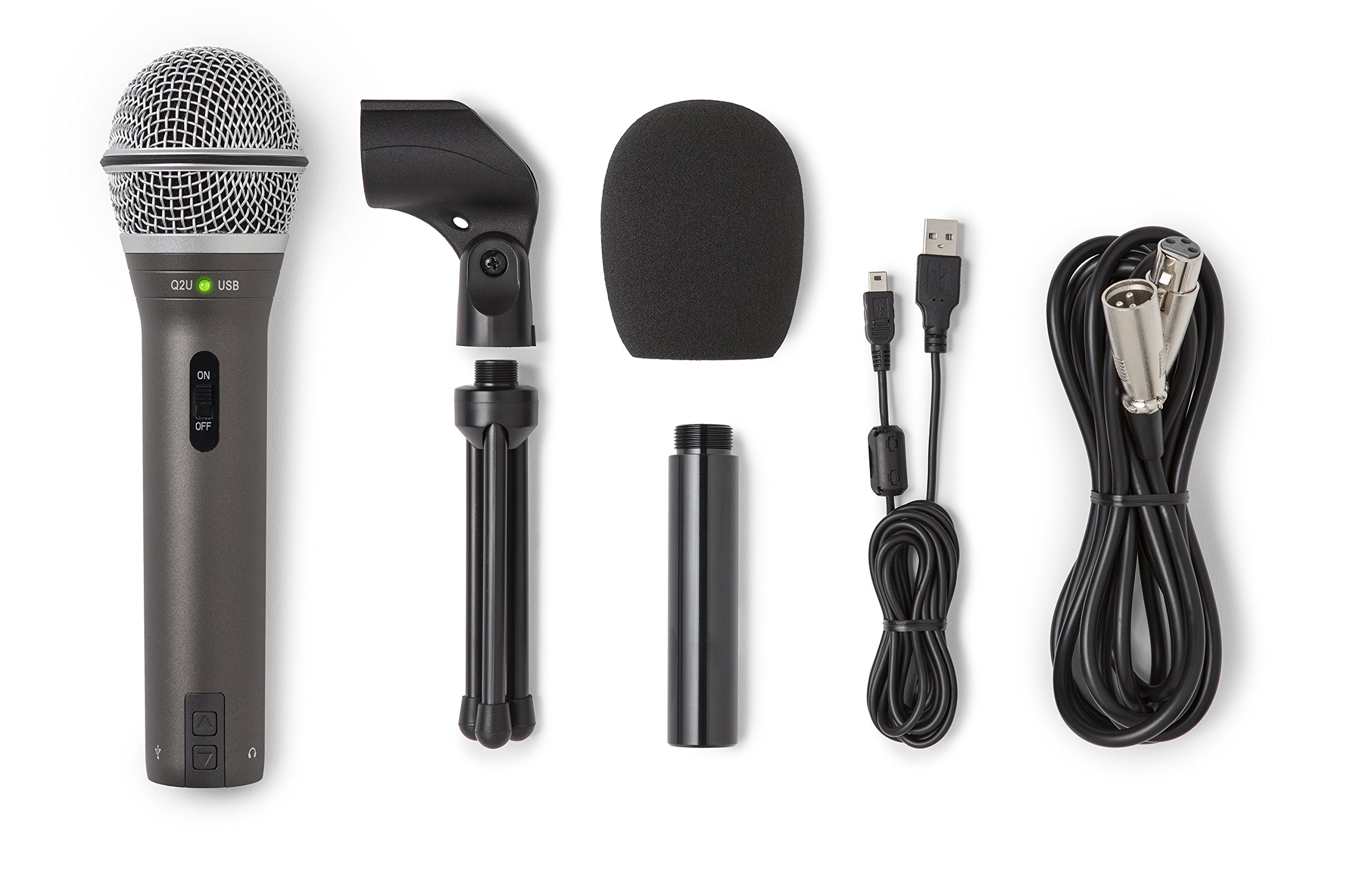
The Q2U may suit a compact desk or computer workflow where USB-C connection and included desktop accessories are more useful.
- The Q2U has USB-C and XLR connections and comes with a desktop tripod stand, extension, mic clip, windscreen, and both USB-C and XLR cables.
- The Rode package pairs an XLR-only broadcast microphone with a floor tripod stand and a 20-foot cable.
Is Rode PodMic Worth It?
The Rode PodMic Bundle is worth considering for a creator building an XLR spoken-word setup who wants the microphone, a floor boom stand, and a 20-foot cable together.
Its cardioid dynamic design and built-in pop filter and shockmount are relevant to close podcast and voice-over work.
Buy it if you have compatible XLR recording gear and enough floor space for the tripod. If direct USB connection or a desktop footprint is central to your needs, choose a microphone built around that workflow instead.
Your review at a glance
3+ ratings
Read Amazon ReviewsRode PodMic Bundle
A practical fit for podcasters and voice-over creators who want an XLR microphone, floor stand, and long cable in one setup.
- Rode PodMic dynamic microphone with cardioid pickup and end-address capsule.
- Internal dual-mesh pop filter and internal shockmount.
- Balanced three-pin XLR output; the dynamic capsule does not require 48V phantom power.
- 20 Hz–20 kHz frequency response.